

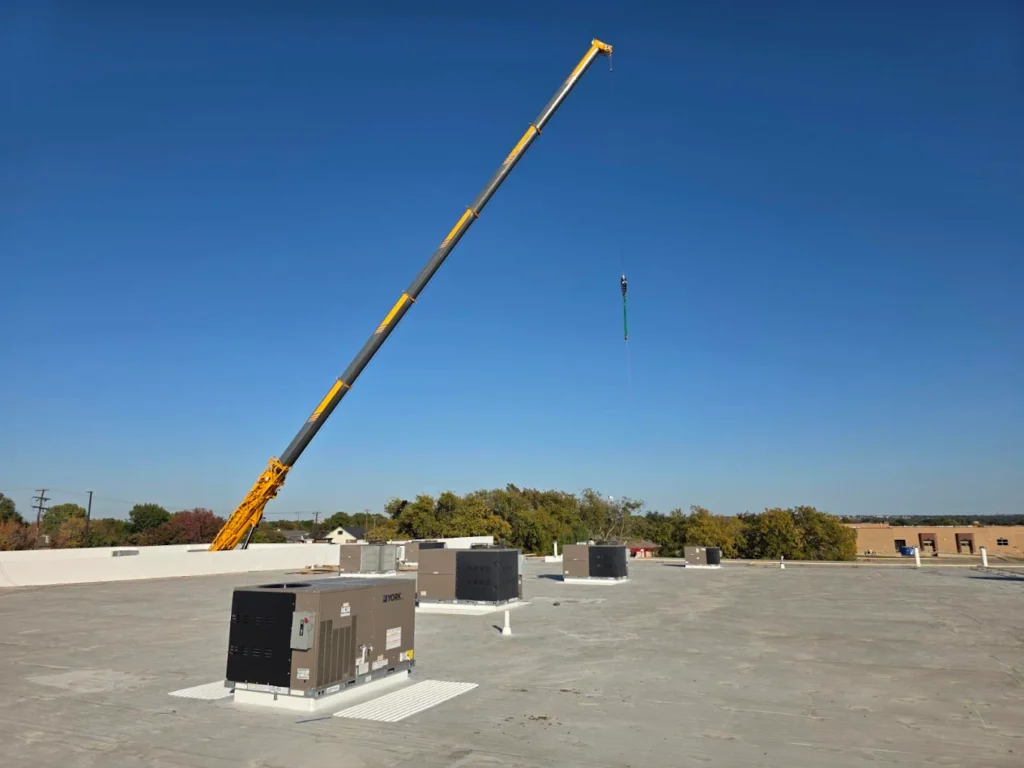
Quick answer: Prepare a North Texas HVAC system for fall by testing the heat before the first cold front, inspecting the correct air filter, opening blocked supply and return vents, checking thermostat operation, clearing visible debris around outdoor equipment, and testing smoke and carbon-monoxide alarms according to their manufacturers’ instructions. Stop the test and request qualified help if you smell gas or hot plastic, see smoke, hear harsh mechanical sounds, trip a breaker, trigger a carbon-monoxide alarm, or cannot get dependable heat.
North Texas can move from air-conditioning weather to a cold morning quickly. That makes early fall a useful time to test the heating system while there is still time to investigate a problem. The right preparation depends on whether the property uses a gas furnace, electric furnace, heat pump, rooftop packaged unit, or another configuration, so this checklist separates safe observations from work that requires training and instruments.

What belongs on a North Texas fall HVAC checklist?
- Identify the heating system. Look at the equipment documentation or thermostat setup to determine whether the property uses a furnace, heat pump, packaged rooftop unit, or another system. Do not remove panels to identify it.
- Check the filter. Inspect it using the equipment manufacturer’s directions. Replace a disposable filter with the correct size and an appropriate type, or clean a reusable filter as directed. ENERGY STAR recommends checking filters monthly.
- Open and uncover vents. Confirm that supply registers and return grilles are open and not blocked by furniture, rugs, inventory, or boxes. Do not close multiple vents to redirect heat; that can change system airflow.
- Review the thermostat. Check the displayed temperature, schedule, heating mode, and batteries if the model uses them. Confirm that programmed setbacks still match the household or business schedule.
- Inspect accessible outdoor areas. Remove loose leaves and visible debris from around an outdoor heat pump or packaged unit without opening the cabinet, climbing onto a roof, or reaching through a grille.
- Test smoke and carbon-monoxide alarms. Follow each alarm manufacturer’s test and replacement instructions. The CDC recommends battery-operated or battery-backup CO detectors near every sleeping area and checking batteries during the fall clock change.
- Run an early heating test. Choose a mild day and use the steps below. Record what you hear, smell, and feel instead of attempting internal repairs.
- Review the last season. Note recurring cold rooms, repeated resets, unusual operating noise, unexplained shutdowns, or repairs that were deferred.
- Schedule appropriate professional maintenance. ENERGY STAR recommends a pre-season heating check in the fall. Fuel-burning equipment requires combustion and venting checks that are not homeowner tasks.
How should you test the heat before cold weather?
1. Prepare the area
Move combustible storage away from the equipment area without disturbing gas, electrical, drain, or vent connections. Confirm that return grilles and supply vents are unobstructed. For a heat pump, visually check the outdoor unit from ground level for leaves or obvious blockage.
2. Set the thermostat deliberately
Switch the thermostat to Heat, set the fan to Auto, and raise the setpoint modestly above the displayed room temperature. Some systems have a normal delay before starting. Avoid repeatedly switching modes or raising and lowering the setting while waiting.
3. Observe one complete cycle
Listen for startup, feel the air at several supply vents, and watch whether the system reaches the setpoint and shuts down normally. A heat pump may deliver air that feels less hot than furnace air while still heating the building. Compare rooms for major airflow differences and note any repeated starting and stopping.
4. Pay attention to odors without guessing
A light dusty odor can occur when heat first runs after a long idle period, but an odor does not prove that a condition is harmless. Shut the system off for smoke, a strong electrical or melting-plastic odor, visible scorching, or an odor that intensifies or persists. If you smell the distinctive odorant added to natural gas, leave the building, avoid switches or flames, and contact the gas utility or emergency services from outside.
5. Check alarms and occupants
A carbon-monoxide alarm or symptoms such as headache, dizziness, weakness, nausea, chest pain, or confusion require an immediate safety response, not HVAC troubleshooting. Move outside to fresh air and call emergency services. Do not re-enter merely because the heating system has been turned off.
Which heating warning signs need attention?
| Observation | Immediate action | What it may require |
|---|---|---|
| Gas odor, carbon-monoxide alarm, smoke, or occupants with possible CO symptoms | Leave the building and contact the appropriate emergency service or gas utility from outside. | Emergency safety clearance before HVAC diagnosis or re-entry. |
| Hot-plastic or electrical odor, sparking, or repeated breaker trip | Turn the system off if it is safe to do so. Do not keep resetting the breaker. | Qualified electrical and HVAC evaluation. |
| Harsh grinding, screeching, banging, or a blower that does not run normally | Stop the test and request service. | Motor, blower, electrical, mounting, or component diagnosis. |
| System starts but cannot produce dependable heat | Check the thermostat, filter, and open vents, then arrange service if the problem remains. | Airflow, controls, ignition, heat-pump, heating-element, or equipment diagnosis. |
| One room or zone remains much colder | Confirm its registers are open and returns are unobstructed. | Duct, zoning, airflow-balancing, insulation, or building-envelope assessment. |
| Heat pump develops light frost outdoors | Observe whether its normal defrost cycle clears it; do not chip ice. | Service if heavy ice persists, blocks the coil, or returns without clearing. |
How does fall preparation differ by system type?
Gas furnace
A homeowner can check the filter, thermostat, vents, alarms, and system behavior. A trained professional should inspect fuel connections, burner combustion, safety controls, heat exchanger condition, and flue or venting. ENERGY STAR identifies improper gas connections and a cracked heat exchanger as safety concerns. Never use an oven or range to heat the building.
Electric furnace or air handler
There is no combustion flue, but high-voltage heating elements, relays, motors, and wiring still require professional testing. Burning electrical odors, repeated breaker trips, or heat that stops and starts unexpectedly should not be treated as DIY part-replacement clues.
Heat pump
The outdoor unit normally operates in heating mode. Keep its accessible airflow area clear and expect it to run a defrost cycle under some conditions. Do not cover the outdoor unit for winter. Persistent heavy ice, failure to switch modes, unusually cool indoor air with falling room temperature, or frequent auxiliary-heat operation may need onsite diagnosis.
Commercial rooftop or packaged equipment
Facility managers can review thermostat schedules, zones, filters, comfort complaints, roof-access procedures, and service records. Roof access, cabinet inspection, electrical testing, combustion analysis, belts, economizers, drains, and controls belong in a qualified service scope. A seasonal visit should account for operating hours and occupied areas rather than applying a residential checklist unchanged.
What North Texas conditions change the plan?
Farmers Branch and surrounding communities can have warm afternoons followed by much colder mornings. Systems may switch between cooling and heating within a short period, so testing both modes before they are urgently needed can reveal thermostat, control, or changeover problems. Heat pumps also need their outdoor equipment unobstructed during heating, unlike a furnace-only system whose outdoor condenser may remain off.
North Texas buildings vary in attic duct exposure, insulation, windows, zoning, ceiling height, occupancy, and hours of operation. Those conditions affect comfort and runtime. A universal number for how quickly every building should warm up is therefore unreliable. A sudden change from the property’s normal performance, persistent cold zones, unsafe symptoms, or failure to hold a reasonable setpoint is more useful evidence.
Should you repair or replace before winter?
A failed heating test does not automatically mean replacement. Filters, thermostat settings, controls, electrical components, ignition parts, blower problems, and some duct defects may be repairable. Replacement deserves comparison when diagnosis identifies a major failure, breakdowns are recurring, compatible parts create practical limits, the system is mismatched to the building, or verified repairs no longer provide reliable comfort.
Ask for the diagnosed condition, supporting measurements, repair scope, replacement alternative if relevant, and installation details in writing. Avoid age-only rules and universal repair-cost percentages. Equipment condition, safety, compatibility, warranty status, installation quality, and building needs all affect the decision.
What should a professional fall HVAC visit include?
The scope should match the equipment. ENERGY STAR’s maintenance checklist includes thermostat settings, electrical connections, motor voltage and current, moving parts, controls, and a complete start-operate-stop cycle. For fuel-burning heating, it also calls for checking gas or oil connections, gas pressure, burner combustion, and the heat exchanger. The EPA and CDC recommend annual professional service for fuel-burning heating systems and attention to flues, chimneys, and venting.
A useful visit should end with an explanation of observed conditions, completed tests, measurements relevant to any recommendation, immediate safety concerns, maintenance performed, and repair options. Commercial owners should also receive clear notes by unit or zone. ASAGA’s residential HVAC services and commercial HVAC services include maintenance and repair as well as system installation.
Frequently asked questions
When should I test my heater in North Texas?
Test it in early fall on a mild day, before the first forecast cold front creates an urgent need for heat. That leaves time to investigate unsafe odors, weak airflow, control problems, or failure to start.
Is a dusty smell normal the first time the heat runs?
A light dusty odor can occur after equipment has been idle, but smell alone cannot verify safety. Shut the system off for smoke, an electrical or melting-plastic odor, visible scorching, a gas odor, or an odor that intensifies or persists. Carbon monoxide itself has no smell.
Should I cover my outdoor AC unit for winter?
Do not cover an outdoor unit without confirming what it is and following its manufacturer’s instructions. A heat pump must exchange heat with outdoor air during winter and should not be covered. Keep the accessible area free of loose debris instead.
How often should I change the HVAC filter?
ENERGY STAR recommends checking, cleaning, or changing it monthly. Actual replacement timing depends on filter design, equipment requirements, operating time, occupancy, pets, dust, and manufacturer instructions. Use the correct size and an appropriate filter for the system.
Do electric heating systems need carbon-monoxide alarms?
An all-electric heating system does not create carbon monoxide by combustion, but a building may contain other fuel-burning appliances, an attached garage, a fireplace, or another CO source. Follow applicable local requirements and alarm-manufacturer guidance rather than basing the decision only on the central heater.
What should I do if a carbon-monoxide alarm sounds?
Move everyone outside to fresh air and call emergency services. Do not search for the source, silence the alarm and remain inside, or re-enter until responders say it is safe. People with symptoms need prompt medical evaluation.