

Quick answer: If your air conditioner is running but the house is not cooling, first confirm the thermostat is set to Cool, inspect the air filter, open blocked supply and return vents, and look for obvious debris around the outdoor unit. Stop the system and request professional service if you see ice, smell burning, hear harsh electrical or mechanical sounds, find water where it could damage the home, or still get warm air after the basic checks. A running fan does not prove the full cooling system is working.
Long cooling cycles can be normal during severe North Texas heat, especially late in the day. Warm air from the vents, a sudden loss of cooling, or a thermostat reading that keeps rising is different. Those symptoms can point to restricted airflow, dirty coils, a control or electrical fault, a refrigerant problem, duct leakage, or equipment that needs an onsite diagnosis.

What can you safely check when the AC runs but does not cool?
Use observations, not disassembly. These steps can rule out simple causes and give a technician useful information without exposing you to electrical or refrigerant hazards.
1. Confirm the thermostat settings
Set the thermostat to Cool and choose a temperature below the current room reading. If the fan setting is On, the indoor blower can circulate room-temperature air even when the outdoor cooling equipment is not operating. Use Auto for a clearer test. Replace thermostat batteries if the model uses them and the display is weak or blank.
2. Inspect the filter and airflow
Check the filter without opening equipment panels. Replace a visibly loaded filter with the correct size and a type approved for the system. Also make sure return grilles and supply vents are open and not covered by furniture, rugs, or boxes. Do not assume the highest-resistance filter is best: the system must be able to move air through it.
3. Compare the air at several vents
Notice whether the air feels cool, merely room temperature, or warm. Compare airflow in several rooms. Weak air throughout the house suggests a different problem than one warm room, which may involve a closed register, damaged duct, solar heat gain, or an airflow-balancing issue.
4. Observe the outdoor unit from a safe distance
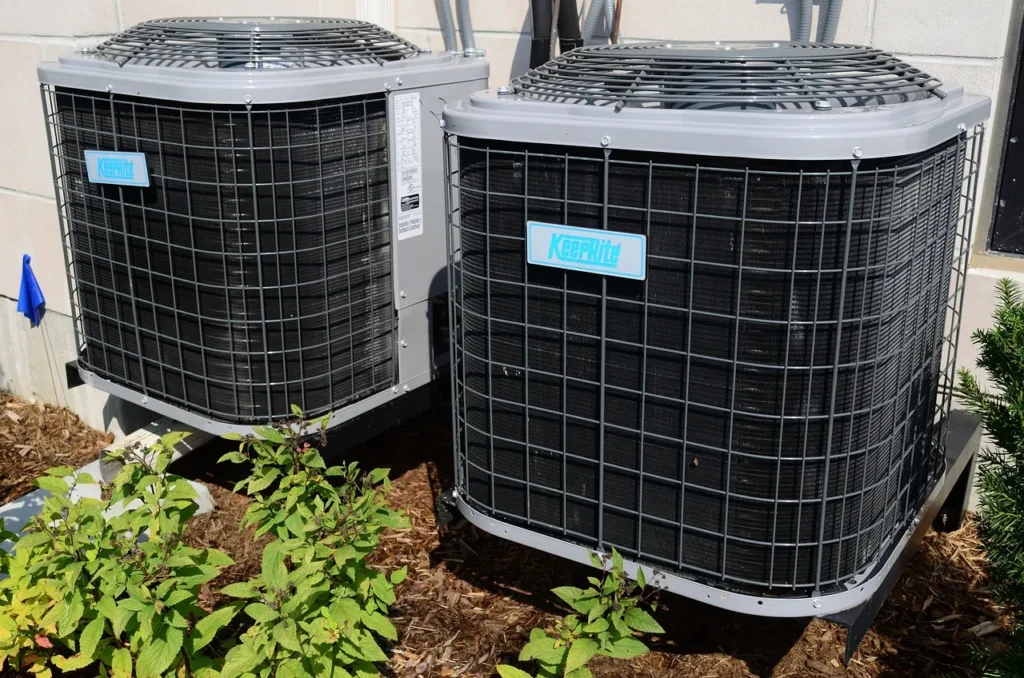
Look for leaves, grass clippings, or stored items that visibly block airflow. Do not remove the cabinet, reach through the grille, spray electrical areas, or touch wiring. Note whether the outdoor fan is running and whether the unit is silent, humming, repeatedly starting, or making a new sound.
5. Look for ice or unexpected water
Visible ice on accessible refrigerant tubing or the indoor unit is a warning sign, not a diagnosis. Restricted airflow and refrigeration problems can both contribute. Water near the indoor equipment can also indicate a frozen coil thawing or a condensate drainage problem. Turn cooling off and arrange service rather than repeatedly restarting the system.
When should you turn the air conditioner off?
| What you notice | What to do now | Why it matters |
|---|---|---|
| Burning odor, smoke, sparking, or repeated breaker trips | Turn the system off. Do not reset a breaker repeatedly. Seek qualified service. | An electrical fault cannot be diagnosed safely from symptoms alone. |
| Ice on tubing or indoor equipment | Turn cooling off and avoid chipping or melting the ice with heat. | Continued operation may worsen the underlying airflow or refrigeration problem. |
| Water near ceilings, walls, flooring, or electrical equipment | Turn the system off if needed to prevent damage and arrange an inspection. | A blocked drain, frozen coil, or other fault may be involved. |
| Outdoor unit hums but its fan does not turn | Turn cooling off and request service. | Electrical components and motors can retain dangerous voltage. |
| Normal sound and airflow, but cooling is weaker only during peak heat | Complete the safe checks and monitor the indoor temperature. | High heat load may lengthen cycles, but persistent loss of cooling still deserves evaluation. |
Why can an AC run without cooling the house?
Restricted airflow
A dirty filter, blocked return, closed supply register, dirty indoor coil, blower problem, or damaged duct can reduce the air moving across the system. The symptom may be weak airflow, uneven rooms, long cycles, or ice. Changing a dirty filter may help, but recurring ice or weak airflow needs diagnosis.
Heat-transfer problems at the coils
The indoor coil absorbs heat and the outdoor coil releases it. Heavy buildup on either coil can reduce cooling performance. ENERGY STAR notes that dirty evaporator and condenser coils can make equipment run longer. Internal cleaning and any work requiring cabinet access should be handled by a professional.
Refrigerant or compressor problems
Low refrigerant, an incorrect charge, a restriction, or a compressor fault can produce overlapping symptoms. Refrigerant is not a homeowner maintenance item. A technician should determine whether a leak or another fault exists before recommending refrigerant service.
Electrical, motor, or control faults
The thermostat can call for cooling while a capacitor, contactor, motor, sensor, wiring connection, or control board prevents part of the system from operating. Because many symptoms overlap and HVAC components may hold hazardous voltage, replacing parts by guesswork is unsafe.
Duct leakage or a building-load problem
If one area stays warmer, cooled air may be escaping through disconnected or damaged ducts, or the room may have a larger heat gain from windows, attic exposure, or air leakage. Equipment repair alone will not correct every comfort problem. A useful assessment separates equipment performance from duct and building conditions.
How does North Texas weather affect the answer?
Air conditioners in Farmers Branch, Dallas, Addison, Carrollton, Richardson, and Plano can run for long stretches during hot afternoons. Runtime by itself does not prove a failure. The more useful questions are whether supply air is cool, whether the indoor temperature is stable or rising, whether airflow changed suddenly, and whether the system shows ice, water, odors, or unusual sounds.
North Texas homes also vary widely in attic insulation, sun exposure, duct location, windows, air leakage, and equipment sizing. That is why a universal claim such as “every AC should maintain a fixed temperature difference from outdoors” is not a reliable diagnosis. Weather and building load can explain long cycles, but they do not explain warm supply air or a sudden change from normal performance.
Does poor cooling mean you need a new AC?
No. A clogged filter, control problem, drain issue, failed electrical part, dirty coil, or repairable duct defect does not automatically justify replacement. Replacement becomes a discussion after the cause is known and the condition of the whole system is considered.
Ask for a repair-versus-replacement comparison when a major component has failed, breakdowns are becoming frequent, comfort remains poor after verified repairs, compatible parts or refrigerant create practical limitations, or the equipment is mismatched to the home. The comparison should account for the diagnosed failure, equipment condition, installation requirements, available warranty coverage, and expected operating performance. Age alone and percentage-based rules are not enough to make a site-specific decision.
What should homeowners avoid?
- Do not open electrical panels or test capacitors, contactors, wiring, or motors.
- Do not add refrigerant or accept a “top-off” without asking why the charge is low.
- Do not chip ice from a coil or use a heat gun to thaw it.
- Do not repeatedly reset a tripped breaker.
- Do not close multiple vents in an attempt to force more air into another room.
- Do not approve replacement before the contractor explains the measured problem and viable repair options.
What should a professional AC diagnostic include?
The exact tests depend on the symptoms and equipment, but the visit should move from evidence to recommendation. A technician should confirm the complaint, review thermostat operation, inspect the filter and airflow path, observe indoor and outdoor equipment operation, and check relevant electrical, drainage, coil, refrigerant, and duct conditions. ENERGY STAR’s maintenance guidance also calls for checking thermostat settings, electrical connections, condensate drainage, coils, refrigerant level, blower components, controls, and the equipment’s start-operate-stop cycle.
Before approving work, ask for the observed failure, measurements that support it, the proposed correction, and any alternatives. If replacement is recommended, ask why repair is not practical and what sizing or installation work is included. ASAGA’s residential HVAC service covers repair, maintenance, installation, and replacement; its commercial HVAC service supports offices, retail spaces, restaurants, and multi-unit facilities.
Frequently asked questions
Why is the fan blowing but the air is not cold?
The indoor blower can run even when the outdoor cooling equipment is off or a cooling component has failed. Confirm the thermostat is on Cool with the fan set to Auto. If the outdoor unit does not operate normally or the vents continue to deliver room-temperature air, request professional diagnosis.
Can a dirty filter stop an AC from cooling?
Yes. A heavily loaded filter can restrict airflow, lengthen cooling cycles, and contribute to coil freezing. Replace it with the correct size and an appropriate filter for the system. If cooling does not return or ice appears, another issue may be present.
Should I turn off the AC if it is not cooling?
Turn it off if you see ice, smell burning, hear harsh or unusual sounds, find damaging water, notice the outdoor fan is not turning while the unit hums, or experience repeated breaker trips. If the system sounds normal and cooling is only weaker during peak heat, complete the safe checks and monitor it, but arrange service if indoor temperature continues to rise.
Is low refrigerant always the cause of warm air?
No. Airflow restrictions, coil problems, electrical faults, controls, ducts, and major components can create similar symptoms. Refrigerant charge must be measured, and low charge should prompt investigation of the cause rather than an automatic refill.
How often should I check my HVAC filter?
ENERGY STAR advises inspecting, cleaning, or changing filters monthly, but the correct replacement interval depends on filter type, system requirements, pets, occupancy, dust, and operating time. Follow the equipment and filter manufacturer’s instructions and replace a visibly loaded filter sooner.
Does an AC that runs all day need replacement?
Not necessarily. Extreme weather and a home’s heat gain can create long cycles. Replacement should follow diagnosis, not runtime alone. A professional should assess cooling output, airflow, equipment condition, ducts, controls, and the building load before making that recommendation.